Blog

Designing UX for AI products: principles for AI-powered interfaces

Designing a traditional interface means designing predictable behaviour: press a button and the same thing always happens. With artificial intelligence that no longer holds. Answers vary, can be wrong, take time, and users don't always know what to ask. That's why UX for AI products needs specific principles that go well beyond adding a chat window.

Why AI UX is different

Three characteristics make AI products unique: output is probabilistic rather than deterministic, the system can be confidently wrong, and its real capabilities aren't obvious to users. A good experience must handle all three explicitly.
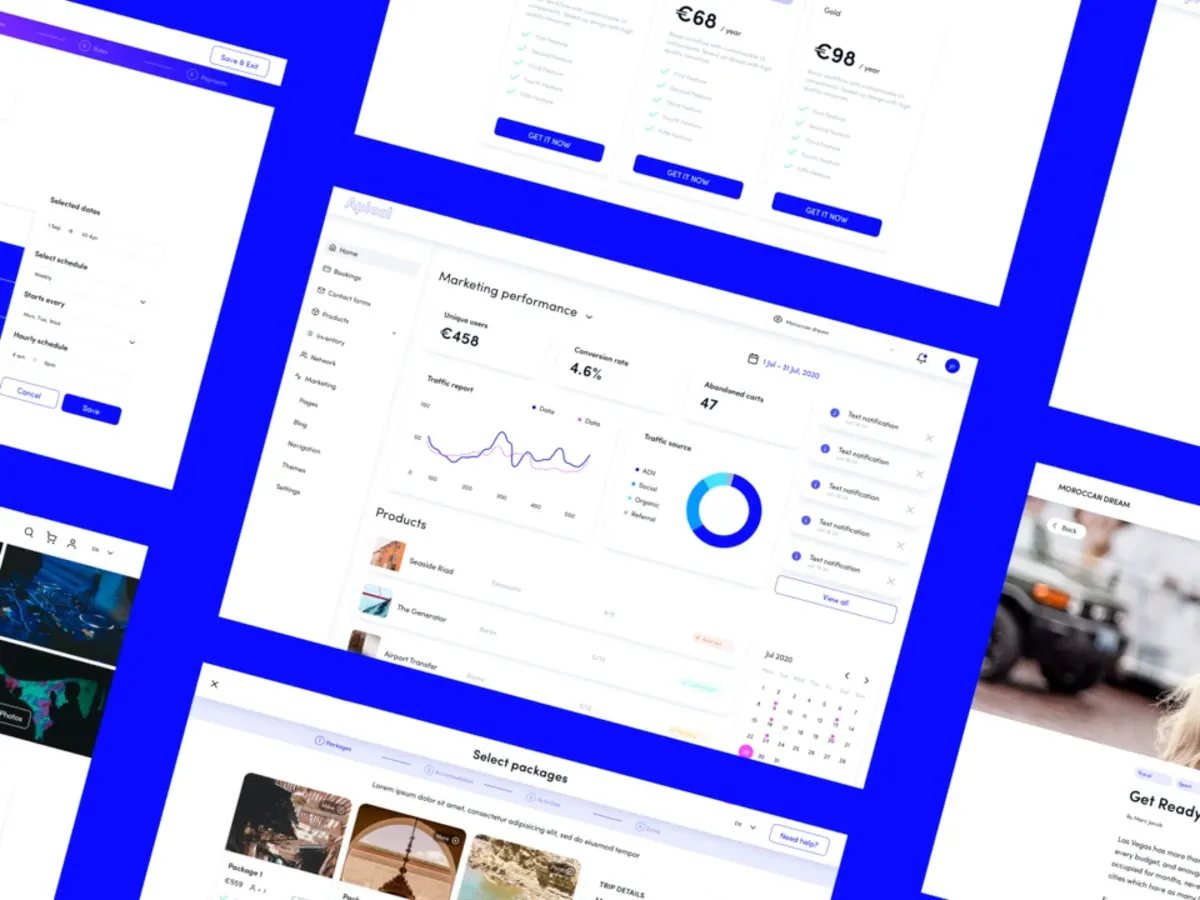
UX design of a web interface

Seven principles for designing AI products

1. Make clear what it can (and can't) do

An empty text box is intimidating. Example prompts, contextual suggestions and a clear description of limitations help users see straight away how to get value.

2. Don't stop at chat

Chat is just one possible pattern. AI often works better embedded in existing flows: a button that summarises, a field that fills itself in, inline suggestions as you type.

3. Show where answers come from

Citing sources, linking the documents used and indicating confidence levels builds trust and lets users verify critical information.

4. Always keep users in control

Before actions with real consequences, such as sending an email, making a payment or changing data, users should explicitly confirm. They must be able to edit, undo and regenerate every output.
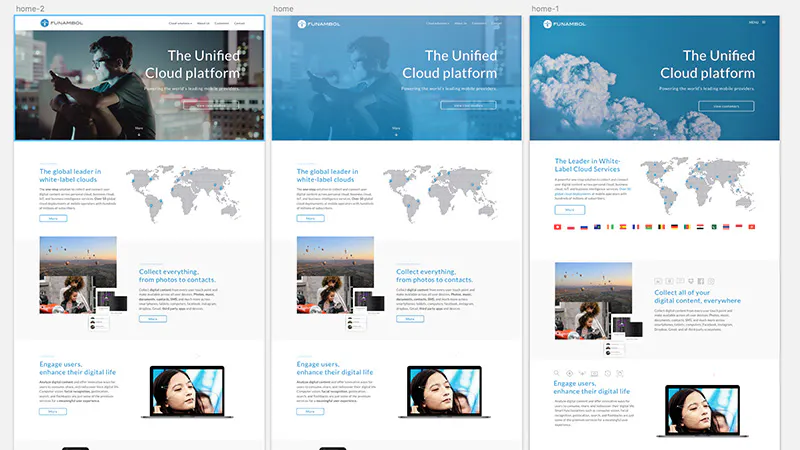
UX/UI design of an app by GlueGlue

5. Design for failure

AI will make mistakes. The interface should make them easy to spot, correct and report, and always offer a way out to a human operator or a traditional flow.

6. Manage waiting times

Streaming responses, progress states ("searching your documents...") and the ability to stop generation make waits feel much shorter.

7. Learn from feedback

Thumbs up and down, corrections and regenerations are valuable data for improving instructions, reference content and flows over time.

GlueGlue team during a user testing session

How to test an AI product

Classic usability testing remains essential, but it should be paired with sets of test cases (evals) that check answer quality across realistic scenarios, including edge cases. Watching how users phrase their requests often reveals expectations very different from what the team assumed.

UX for AI products: frequently asked questions

Do you always need a conversational interface?

No. For many tasks a structured interface with AI working behind the scenes is faster and less ambiguous. Chat is useful when requests are open-ended and varied.

Should users be told they're interacting with AI?

Yes. It's good transparency practice and, in many cases, a requirement under the EU AI Act.

How do you measure the success of an AI feature?

With task-related metrics: time saved, completion rate, share of outputs accepted without edits and user satisfaction.

Conclusion

AI technology is increasingly accessible; what sets successful products apart is the quality of the experience built around it. Clarity, transparency, control and error handling are the principles that turn a powerful model into a tool people trust. GlueGlue's UX team designs AI interfaces for apps and platforms, from research to testing.

Let's talk about your project: get in touch with the GlueGlue team

Our headquarters

Milano
Via Santa Marta 19/A, Milano
+39 02 829 40378
Paris
3 Rue Dangeau, Paris
+33 1 87 65 24 05

Our partners

We are the only Italian company partner of Google Flutter. Our partnerships and awards are the lifeblood of our work: from Stripe to Google, we choose excellence to guarantee continuous value to our customers.

Our replies
to your questions

Apri o chiudi
Why choose glueglue?

We are a digital product agency with over 10 years of experience and advanced expertise in design and development. We have refined an agile and effective method, suitable for both startups and large enterprises, ensuring execution speed and consistent quality. We position ourselves in the upper‑mid range of the market, offering excellent value for money. Every project is overseen directly by the founding partners to ensure outstanding results. We are among the top User Experience and digital product agencies on Clutch, the leading global database for digital consulting.

Apri o chiudi
How does glueglue work and what are your areas of expertise?

We start with an in‑depth needs analysis, considering product and business objectives in the medium to long term. We often begin with visual identity: we assess positioning, analyze competitors, and identify opportunities to improve brand and image. We then move to UX/UI: we conduct a professional UX Review to identify areas for intervention and improve the usability of the site or app. We design the User Journey Map, mapping all touchpoints to understand real use cases and where to create tangible value. We create wireframes and share an interactive prototype that defines the functionality, structure, and interactions of each page. Once the wireframes are consolidated, we refine the interface design in detail to ensure a pleasant and consistent experience. Finally, our developers implement the product with modern technologies such as React, Flutter, Symfony, Svelte, Node.js, and more, ensuring quality, stability, and pixel‑perfect results.

Apri o chiudi
Do you use artificial intelligence?

Yes, on two fronts. Inside our own method, where it helps designers explore and compare several directions in hours instead of days, and helps engineers accelerate repetitive phases and raise quality with broader review and testing.
And inside the products we build for our clients: document and file analysis, predictive models, understanding of unstructured text, semantic search, assistants and automations.
For us it is a multiplier, not a shortcut: people stay in the loop and every AI feature has a success metric defined before it is written. Read how we use AI.

Apri o chiudi
What sets glueglue apart from other top design or product agencies?

We work on a limited number of projects to maintain constant focus and achieve excellent results. We manage each project with clear deadlines and regular meetings, building tailor‑made, truly customized solutions. With over 10 years of experience in digital, we apply a proven method that maximizes results in strategy, design, and development.

Apri o chiudi
Can you handle web design?

Yes. We work on iOS/Android apps, web apps, and complex platforms. A dedicated team also creates marketing websites, sites designed to effectively promote products or services.

Apri o chiudi
Do you also do branding or should I look for another agency?

We are a full‑service agency and offer branding services such as naming and logo design. We produce complete brand guidelines and work both on existing guidelines and in collaboration with other branding agencies.

Apri o chiudi
How much does it cost to entrust you with a digital project?

We believe in transparency: talking openly about budget helps create value for both sides. Every client has different needs, which is why we don’t use a fixed price list. Instead, we take the time to understand the context and propose a tailored approach with a fair, appropriate investment. Our UX/UI design projects start at €15,000, while branding engagements begin at €8,000. Mobile app development typically requires an investment starting from €40,000, web apps from €30,000, and websites from €15,000. Our average hourly rate for consulting is €70/hour.

Apri o chiudi
Do you also work with early‑stage startups, therefore with limited resources?

Absolutely yes: we love startups and often collaborate with talented entrepreneurs. We have invested in multiple ventures, favoring work for equity, contributing to funding rounds totaling over €30 million.

Let's talk about your partnership

Tell us a bit about you, and the boldest challenge you’re taking on

Contact us